You are preparing a UFACTORY xArm for an overseas production line — not a desk demo. Use this checklist to freeze the workcell, mounting, workspace, payload and reach as fields to confirm, the SDK and permissions path, and a site safety assessment. You are not collecting a lab certificate here. Confirm every numeric limit and edition against current supplier documents and your destination rules before you commit the line.
Who this checklist is for
You should use this page when your overseas team is moving an xArm-class arm from evaluation toward a supervised production-line cell. You keep the sister case for workcell narrative and the parent resource for configuration and SDK procurement. You stay here for production-line readiness: what you must freeze on site before you treat the cell as line-ready.
1. Freeze the line task and the workcell — not only the arm
You write the station job in one paragraph: workpiece family, permitted motions, human involvement, and what “good enough” means for your acceptance owner. You name fixtures, cameras, conveyors or tables that share the cell. For the workcell-not-just-the-arm framing, read once: UFACTORY xArm: specify the workcell, not just the arm. You do not treat a short successful video as proof of line rate or of how much operator help you still need.
2. Mounting surface and base fix
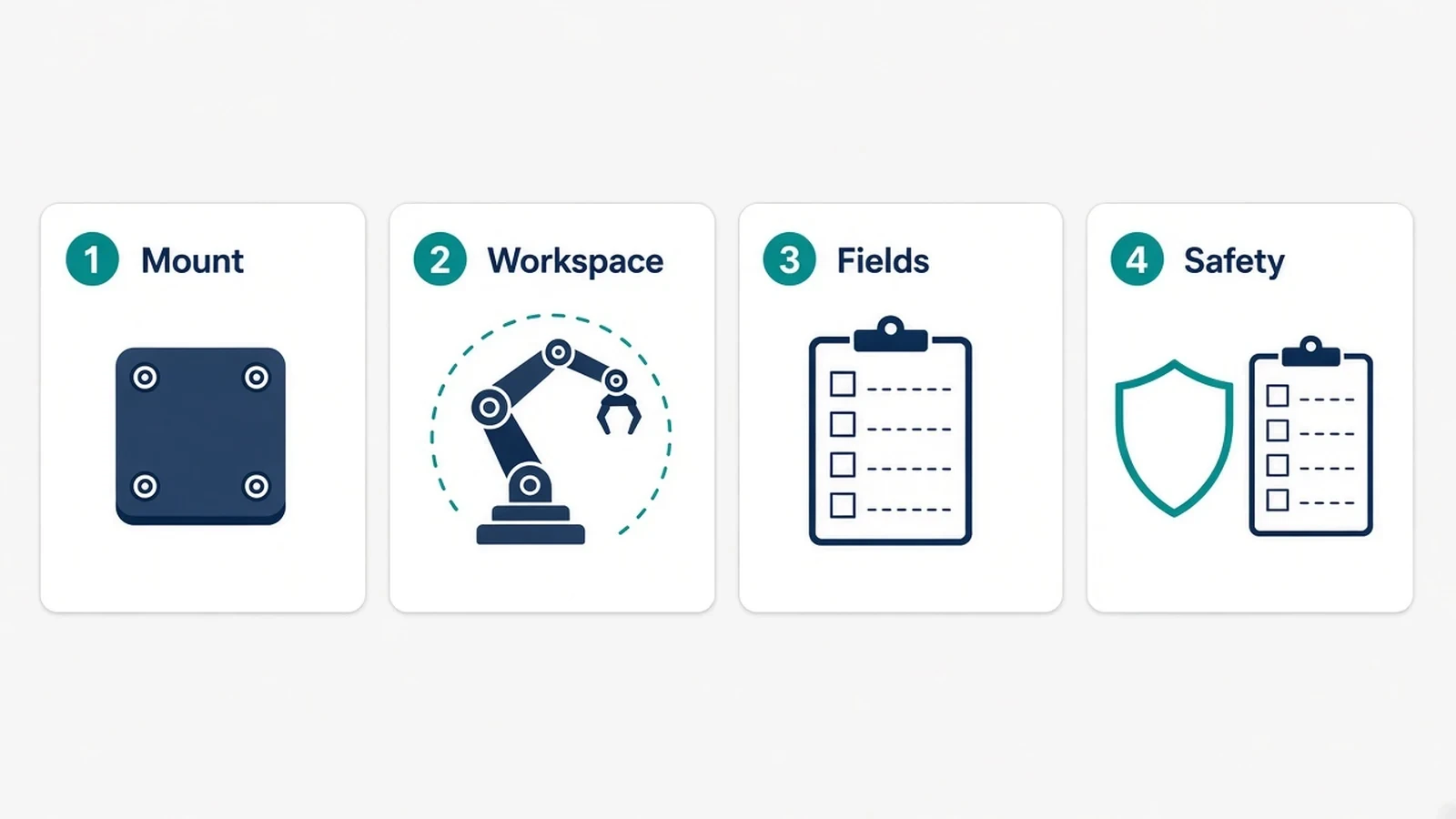
You confirm the mounting surface is shockproof and sturdy, and that base bolts are tight, before you power the arm for line trials. UFACTORY’s hardware-installation guidance asks for a surface that can withstand at least ten times the full torsion of the base joint and at least five times the weight of the arm. You keep liquids off the arm and controller hardware, and you avoid long humid storage. You disconnect external AC before you connect or disconnect the arm cable.
3. Define working space for the station
You map the workspace as the area within the extension of the links, and you include room for your end effector even though published working-range figures exclude it. You keep people and equipment out of that motion envelope during supervised runs. You place the Control Box outside the working range so you can reach the emergency-stop. You mark the motion range for operators so your team can see the cell boundary on the floor.
4. Payload, reach and tooling — fields to confirm
You list payload, reach, workspace, end effectors, fixtures and cameras as fields to confirm for the exact edition you will receive — you do not invent kilogram or millimetre values on this page. You match those fields to representative parts from your line, not to a brochure demo object. You record tool, fixture, camera and integration costs beside the arm line so your overseas quotation comparison stays complete.
5. SDK and permissions — point to the parent path
You do not rebuild the configuration and SDK procurement essay here. You still confirm, in writing, the product edition, serial or configuration code, firmware, developer permissions, SDK version, operating system, interfaces and supported examples. You open the parent resource once after the FAQ when you need that procurement path. A public SDK repository does not prove identical access across every SKU or a commercial relationship with CNPS.
6. Safety assessment — site owner, not a lab certificate
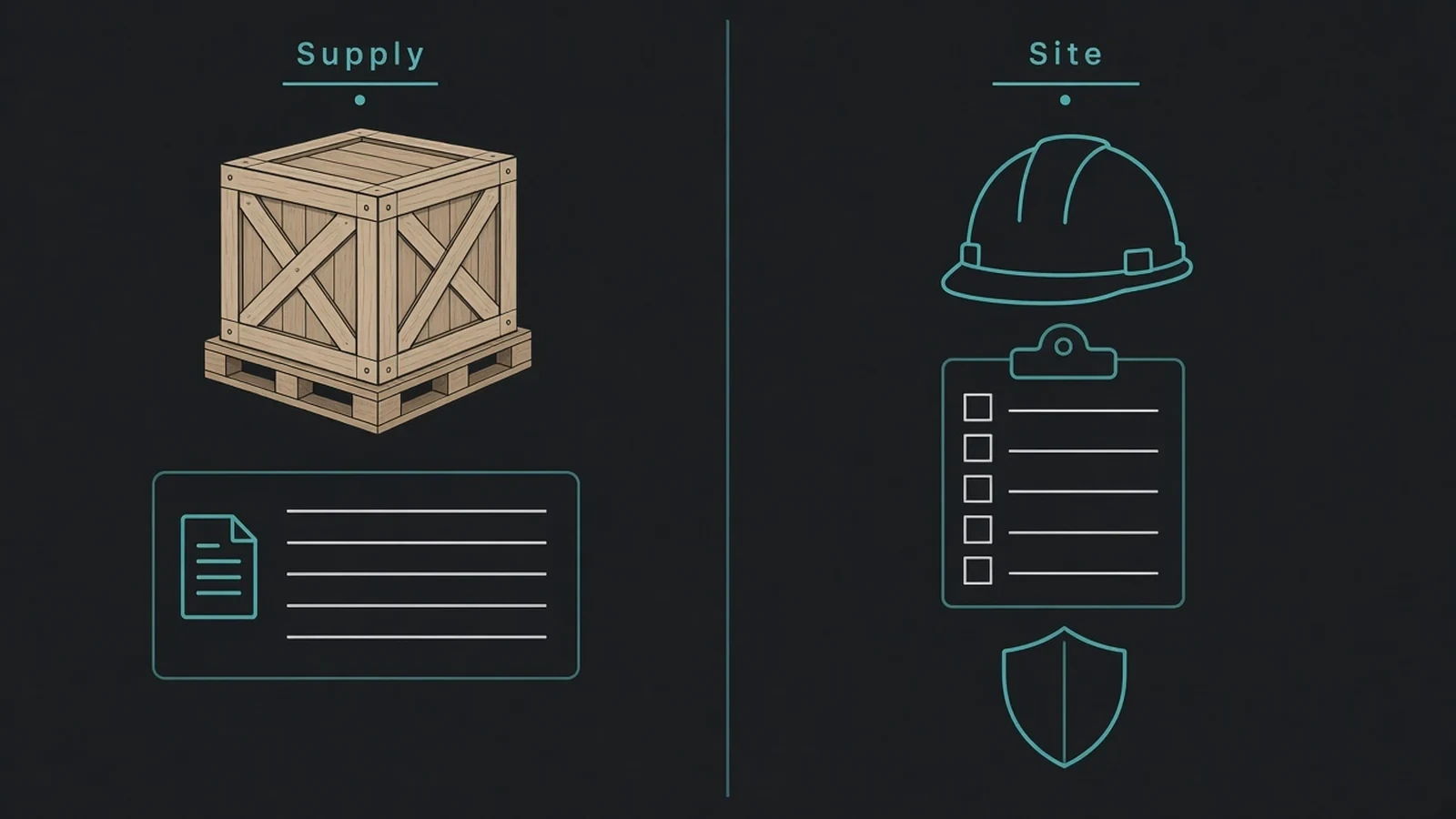
You treat the manufacturer safety and installation manuals as inputs, not as a certificate that your complete line is ready. UFACTORY states that a safety assessment is required each time the arm is installed, and that a complete safety assessment must be recorded when the arm is re-installed and debugged. You name a qualified site owner for site safety and permitted operation. You run a risk assessment for the complete system under the standards and regulations of the country where you install. You do not use the emergency-stop alone as your only risk-reduction measure.
7. Supervised acceptance before you call the cell line-ready
You name a qualified operator and an acceptance owner on your side. You start in simulation where you can, then run controlled, supervised tests with difficult examples included. You count successful attempts against all attempts, and you preserve failed runs, recovery times and configuration changes. You agree excluded work in writing so a passing sample does not silently expand into unowned line scope.
What this page will not invent
You will not get payload tables, reach millimetres, accuracy percentages, prices, enquiry volumes or certificate years invented for CNPS. You will not get a claim that an SDK is a complete safety design or a production-ready workcell. You will not get a CNPS partnership claim with UFACTORY or a guaranteed task result. Recheck live supplier documents and destination rules when your edition or site changes.
FAQ
How is this production-line checklist different from the UFACTORY xArm case study you already have?
You use the case study when you need the workcell narrative: SDK as one input, tooling and site conditions, and what to evaluate. You use this checklist when your overseas team must freeze mounting, workspace, confirmation fields, safety assessment ownership and supervised acceptance for a production-line cell. You should not collapse the two pages into one essay.
Where do you confirm SDK version and developer permissions?
You confirm edition, written developer permissions, SDK version, operating system, interfaces and examples on the robotics-procurement path, not by restating that full list as this page’s main job. You still block quotation until those items are named for the SKU you will receive. A public repository alone does not prove access for every edition.
What mounting checks should you finish before first powered line trials?
You verify a shockproof, sturdy mounting surface, tight base bolts, and a surface capacity consistent with UFACTORY’s installation guidance on base-joint torsion and arm weight. You keep the Control Box outside the working range, disconnect AC before cable work, and keep liquids away from the hardware. You record those checks against the exact station drawing you will use overseas.
Is a manufacturer safety assessment the same as a lab certificate for your line?
No. You use the manufacturer requirement that a safety assessment is required at each install, and that a complete assessment must be recorded after re-install and debug, as a process gate. You still need your qualified site owner and a complete-system risk assessment under local standards. This page is not a CE, ISO or lab certificate substitute.
Which fields must you confirm instead of inventing payload or reach numbers?
You confirm payload, reach, workspace, end effectors, fixtures and cameras for the exact edition, against supplier documents and your representative parts. You refuse invented kilogram, millimetre or accuracy claims on this checklist. If a quotation omits those fields, you treat that as incomplete rather than guessing, and you ask the supplier to fill the gaps in writing before you proceed.
Who owns site safety versus hardware supply on your overseas cell?
You keep hardware supply and exact edition with the supplier, integration and tooling with your integrator or customer engineering team, and site safety with a qualified site owner. You assign training, maintenance and spares to an agreed service provider, and acceptance to your customer project owner. You write those names before you ask for a firm quotation.
When should you open Start a conversation from this checklist?
You open Start a conversation when you can share destination, industrial or research task, preferred platform, development needs, quantity, timeline and local support plan. You should not send only a model name. You use that path after you freeze the workcell and confirmation fields above, so the enquiry matches a production-line readiness state.
You now have a production-line readiness sequence for an overseas xArm cell: freeze the station and workcell, verify mounting and workspace, confirm payload and reach as fields, route SDK and permissions to the parent resource, record a site safety assessment, then accept only with supervised metrics. Open Robotics procurement: configuration and SDK access when you need that path next; keep the case study for workcell narrative. Recheck live documents when your edition or destination changes.