“Best AI voice recorder under $150” is a ranking query, and rankings usually hide the assumptions that matter to a business buyer. This article does something narrower: it maps which TicNote listings on shop.cnps.ai sit under $150 USD, what the listings say about them, and how to choose within that band without importing figures nobody has published. It is a lineup map for one range, not a multi-brand verdict.
The entry points on this site are the TicNote card and TicNote Lite pages, which carry the listing facts and a checklist of what to verify.
1. Fix the budget line before the shortlist
Decide whether $150 covers the device alone, the device with a one-year plan, or one device per person across a team. The same line produces different shortlists. Also decide whether the recorder must be visible on a table, which matters for consent in meetings, or worn, which points at earbuds and out of this band.
2. What lists under $150
| Listing and variant | Listed price (USD) | What the listing says |
|---|---|---|
| TicNote Lite, Basic | $99.99 | A lighter recorder for meetings and lectures; transcripts and summaries in the app |
| TicNote Lite, With One Year Pro Plan | $119.99 | The same Lite hardware with the one-year plan variant |
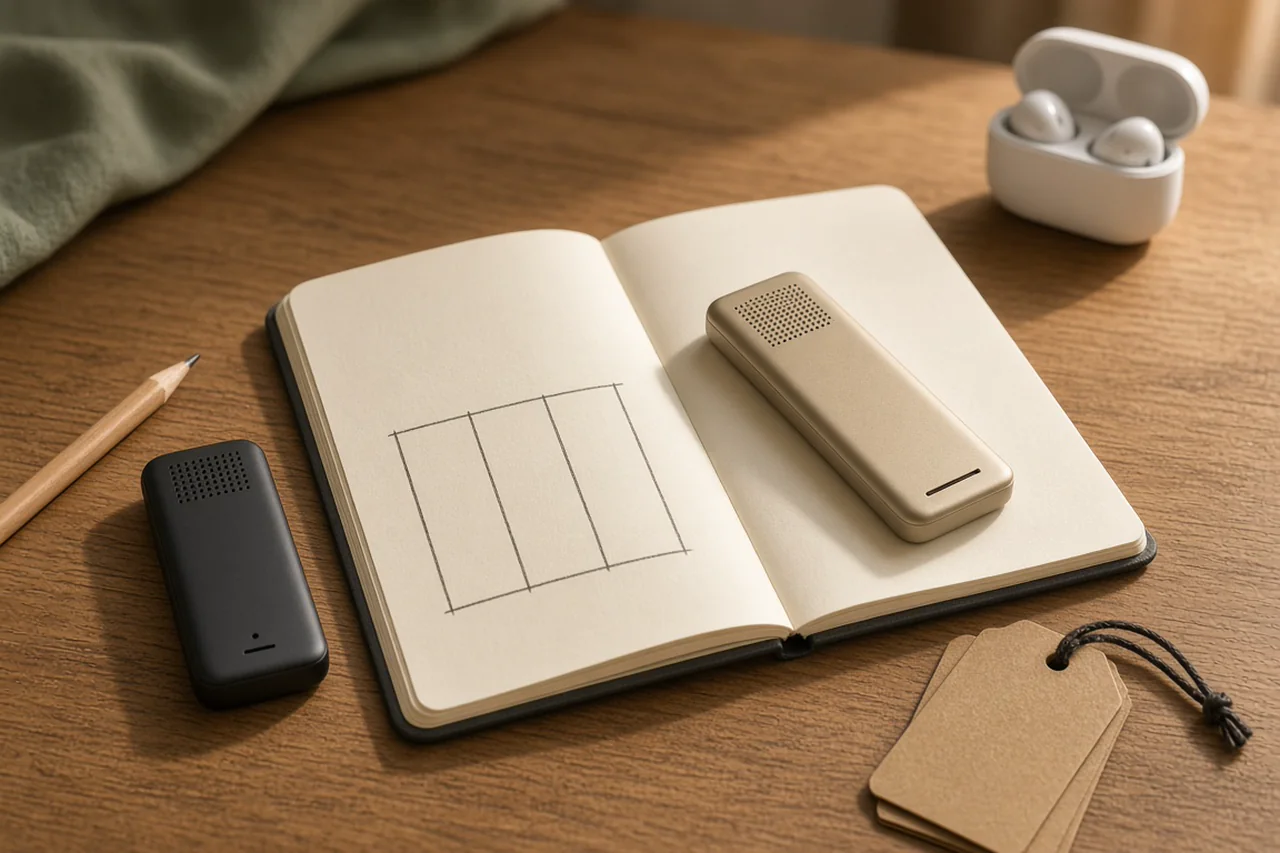
| TicNote card, Basic (Gray, Gold or Blue) | $139.99 | Card-sized recorder for meetings, lectures and calls; 64GB (about 434 hours) |
Those are the three hardware variants under the line as read in September 2026. The card with 1-Year Pro Plan ($189.99 to $199.99) and both Pods models sit above it. Prices change; confirm the live variant before ordering.
3. Card or Lite inside the band
The published differences are few and specific. The card names calls as well as meetings and lectures, publishes 64GB of storage and offers three colours; Lite publishes neither storage nor colours and is positioned as the lighter, lower-priced recorder. Treat 434 hours as storage capacity: no listing in the range publishes battery hours, microphone counts or thickness, so do not let a third-party roundup supply them. Choose the card when storage, colour or calls are named requirements; choose Lite when the lowest published price per person is the requirement.
4. When the step up to Pods is justified
There is no Pods variant under $150. Pods WiFi list from $219.99 as open-ear earbuds for recording on the move; Pods 4G list from $239.99, are described as transcribing without Wi-Fi and are labelled a 4G (North America) version. Step up only when the recording actually happens while walking, on calls or on site. A budget band should not decide that; the workflow should.
5. Plans, minutes and refunds
Transcription minutes follow the account, not the price band: eligible hardware includes 600 minutes per month, unbound free accounts 300, some 1-Year Pro listings 2,100. The Pro plan is a variant, not a separate product, and a digital plan is refundable within 30 days only while unused and unactivated. If monthly recording volume is unknown, Basic first is the lower-risk order. Shipping destinations and return limits are on the shipping and returns pages.
6. Prove the choice with one unit
Buy one Basic unit of the form you chose and run it for two weeks in the real room, with the real languages and terminology. Log every session: duration, environment, whether the transcript was usable without editing, and the time spent correcting. The method is in Plan an AI meeting device pilot. Decide quantity and plan after that log exists, not before.
Live prices sit on the shop listings (TicNote Lite on shop.cnps.ai, TicNote card); this site does not take payments. For a class or team order, request a quotation with quantity, destination and required date.